
Wooden windows ROI: Do they add value to a property?
Yes – timber windows consistently add measurable value to a property, both at point of sale and over the full...
Read MoreLast Updated: 15 June 2026
Stormproof casement windows use a lipped, overlapping sash that closes proud of the outer frame, creating a physical barrier against wind-driven rain and draughts. For contractors and specifiers working on exposed sites, period retrofits, or new builds across the North West, this design detail is the difference between a window that performs and one that fails a weather test at handover.
Here is what you need to know to specify them correctly.
A traditional casement sits flush within the frame opening. A stormproof casement has a sash that laps over the external frame rebate, creating a stepped profile that deflects water before it reaches the seal line.
This lip is not just aesthetic. It produces a compression seal at multiple points around the sash perimeter, so as wind pressure increases, the closing force tightens the weather seal rather than fighting it. That performance behaviour is precisely why the stormproof design has dominated UK residential construction since the 1950s.
Key structural differences at a glance:
| Feature | Standard casement | Stormproof casement |
| Sash position | Flush with outer frame | Overlaps outer frame |
| Seal planes | Single | Double (outer lip + inner gasket) |
| Weather resistance | Standard | Enhanced |
| Security barrier | Frame edge | Lipped rebate adds depth |
| Visual profile | Flat, minimal | Stepped, traditional |
Timber remains the material of choice for high-specification stormproof windows on traditional and heritage projects. Accoya, the acetylated modified timber used by GB Joinery, delivers dimensional stability that prevents the seasonal movement responsible for seal failure in standard wooden frames. Its natural insulation properties, combined with double or triple glazing, allow finished windows to achieve U-values of 1.2 W/m²K, comfortably meeting Part L of the Building Regulations.
Timber frames also accept micro-porous paint finishes that breathe with the material, which prevents moisture trapping, the primary cause of rot in softwood casements. A factory-applied three-coat system extends maintenance cycles and keeps your home weatherproof between redecoration visits.
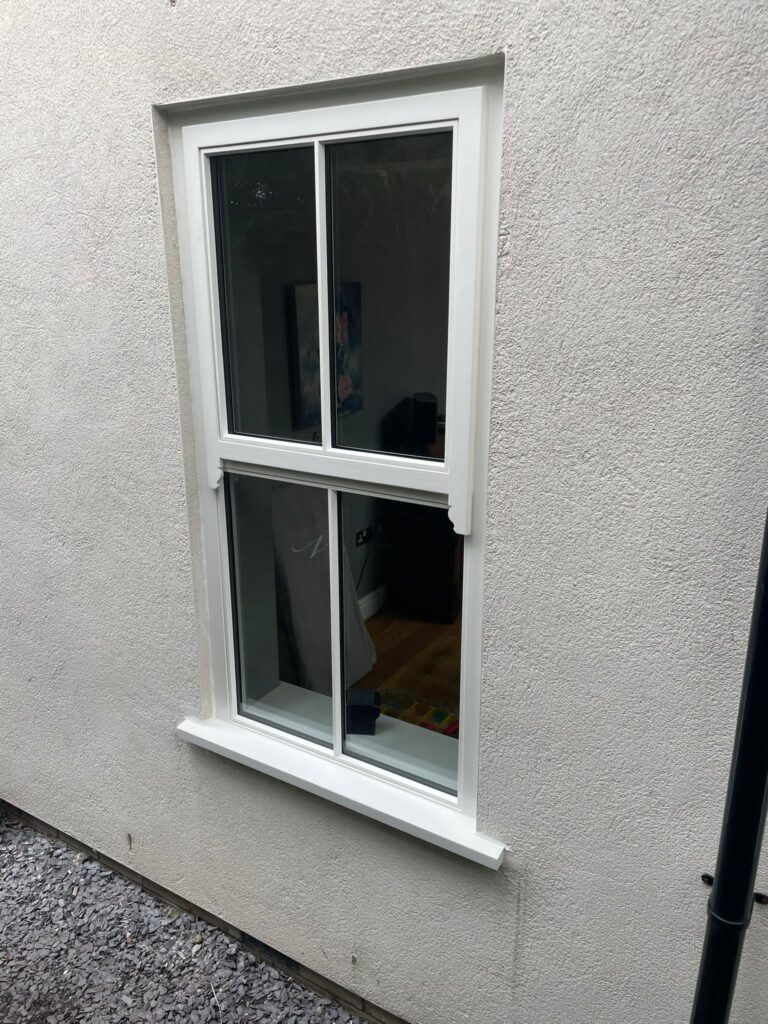
When specifying stormproof casement windows for exposed or coastal locations, glazing choice matters as much as frame design.
Double glazing remains the standard for most UK residential projects and delivers strong thermal performance at a competitive price point. Triple glazing is worth specifying on north-facing or high-altitude elevations where wind and thermal load are greatest, or where acoustic performance forms part of the brief.
Additional specification considerations include:
GB Joinery manufactures bespoke stormproof timber casement windows with a 4-6 week lead time from drawing approval to finished product. For contractors managing programme risk, that reliability matters. All windows arrive primed, finished, and ready to install, reducing on-site labour time and snag risk.
Get in touch with the GB Joinery team to discuss your specifications, request a quote, or talk through glazing options for your next project.
A stormproof casement is an outward-opening wooden window where the opening sash overlaps the outer frame when closed. This rebated, lipped design creates a tighter weather seal than a flush casement, making it well-suited to exposed or high-rainfall locations.
Yes. When manufactured in timber with traditional moulding profiles and appropriate glazing bar patterns, stormproof casement windows are accepted by most conservation officers as a sympathetic replacement in period settings. Always confirm with your local planning authority before ordering.
At GB Joinery, your order is typically manufactured and finished within 4-6 weeks of drawing sign-off. Frames arrive ready-primed or fully painted to your specified colour.
Yes. Correctly specified timber stormproof windows with double or triple glazing meet Part L (thermal performance) and Part Q (security) requirements. GB Joinery’s windows achieve U-values of 1.2 W/m²K as standard.
GB Joinery’s preferred timber is Accoya, an acetylated modified wood sourced from sustainably managed Radiata Pine. Its dimensional stability and resistance to rot make it particularly suited to weather-exposed applications. Alternative species are available on request.
Yes – timber windows consistently add measurable value to a property, both at point of sale and over the full...
Read MoreFor construction and renovation projects, selecting the right timber window suppliers can have a significant impact on quality, project timelines,...
Read MoreMade to measure wooden windows give contractors a precise fit for every opening, regardless of size or shape. No cutting...
Read MoreFor anyone restoring or upgrading a period property, few decisions carry as much weight as choosing the right windows. In...
Read More

.png/v1/fill/w_180,h_180/yell-logo-full-bleed-190%20(002).png)
