
Why Specify Accoya Timber Windows On Site
Window failures cost contractors time and money. Swelling frames, failed paint finishes and rot callbacks eat into profit margins and...
Read MoreLast Updated: 24 August 2026
For most replacement window projects, Accoya is the strongest all-round choice. It offers the dimensional stability of a hardwood, the workability of a softwood, and a BRE-verified 60-year service life that no other timber species can match. But Accoya is not the right call for every job. Oak suits heritage settings beautifully. Treated softwood keeps budgets lean on new builds. The best wood for your replacement windows depends on the building type, the maintenance commitment and the project budget.
Three categories dominate the timber window market in the UK:
Each sits at a different point on the cost-versus-durability curve, and understanding where your project sits is the starting point for any material decision.
Treated softwood, usually European redwood, is the default choice on high volume new-build and refurbishment work because it is easy to machine, takes paint cleanly and costs less per frame than hardwood alternatives.
Where softwood earns its place:
Finger-jointed or engineered softwood performs better than solid sections because the jointing process removes defects and reduces the risk of the movement that causes paint to lift. If you are specifying softwood, it is worth insisting on kiln-dried, finger-jointed profiles rather than solid green timber.
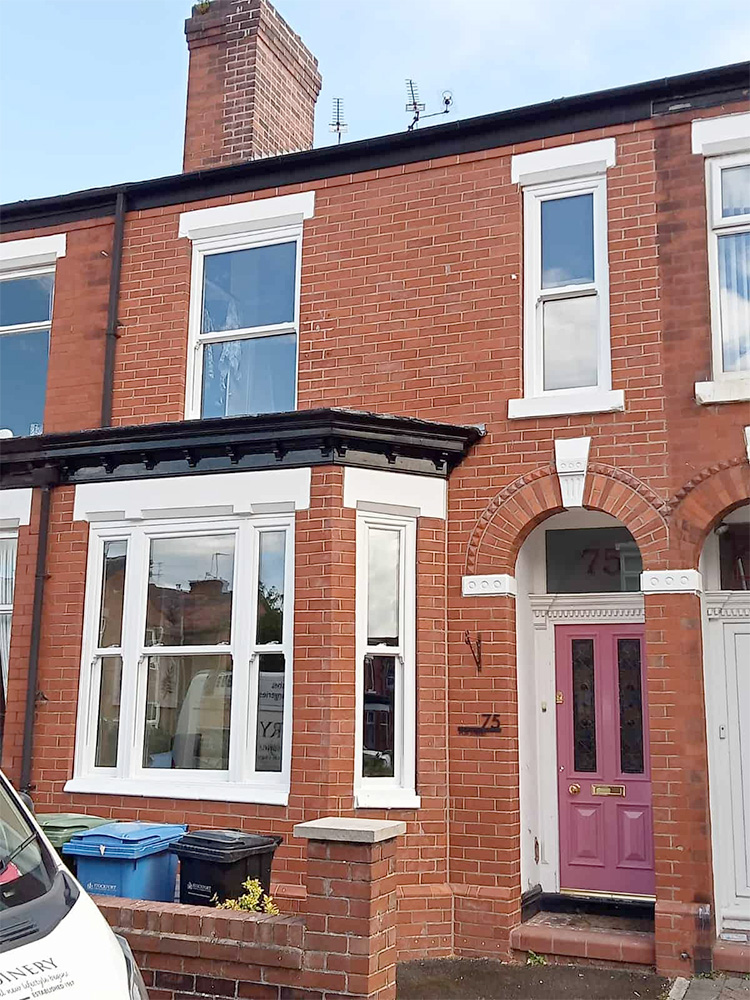
Oak is the most recognised hardwood for window frames in the UK. It is dense, naturally durable, and it has the visual appearance that sits well on heritage buildings, listed properties and high-specification residential work.
Oak’s tight grain resists moisture absorption better than most softwoods in untreated form. Properly maintained oak window frames routinely reach 40-60 years in service, and in some heritage settings considerably longer. The timber also holds fixings reliably, an underrated quality when you are fitting multi-point locking hardware into a replacement frame.
Other hardwoods used in window manufacture include sapele (a West African species with good rot resistance and a striking ribbon figure), iroko (often used as a teak substitute) and meranti. Each has its own characteristics, but oak remains the most specified hardwood for replacement windows in the UK market.
Accoya is a softwood, usually radiata pine, that has been modified through a process called acetylation. The process replaces the hydroxyl groups in the wood’s cell walls with acetyl groups, dramatically reducing the wood’s ability to absorb and release moisture.
Dimensional stability. Accoya swells and shrinks significantly less than untreated timber. This means frames stay true across seasons, reducing the sticking sashes and failed paint edges that generate callbacks on softwood jobs.
Sustainability. Accoya is produced from FSC-certified plantation softwood, a rapidly renewable resource, and the acetylation process uses acetic anhydride, which breaks down to vinegar on exposure to moisture. It carries no toxic preservative load.
Guaranteed performance. Accoya comes with a 50-year above-ground rot guarantee from the manufacturer. For a contractor or specifier managing client expectations over the long term, that warranty is a meaningful backstop.
At GB Joinery, we have been manufacturing with Accoya since 2008. Our Accoya window range holds one of the only BFRC A+ energy ratings on Accoya casement windows in the UK and we are one of a very small number of manufacturers to hold an official A rating on Accoya vertical sliding sash windows.
| Treated softwood | Oak hardwood | Accoya | |
| Durability class | 3-4 | 2 | 1 |
| Typical lifespan | 25-35 years | 40-60 years | 60+ years |
| Maintenance cycle | Every 4-7 years | Every 5-8 years | Every 8-12 years |
| Dimensional stability | Moderate | Good | Excellent |
| Thermal performance | Good | Moderate | Very good |
| Cost relative to softwood | Baseline | +30-50% | +40-60% |
| Rot guarantee | Non-standard | Non-standard | 50 years |
| Best suited to | Volume new build | Heritage/listed | Any project type |
Oak remains the traditional choice for heritage work, and for good reason. Planning authorities and conservation officers are familiar with it, and it sits comfortably within traditional joinery profiles.
That said, Accoya is increasingly accepted on conservation projects, including listed buildings, because it can be profiled to match original sections precisely and its dimensional stability reduces the risk of seasonal movement cracking single-pane glazing.
If the project sits within a conservation area or involves a listed building, it is worth checking with the relevant planning authority before committing to a material. In our experience, both oak and Accoya are generally accepted. Softwood can be harder to justify on higher-graded structures.
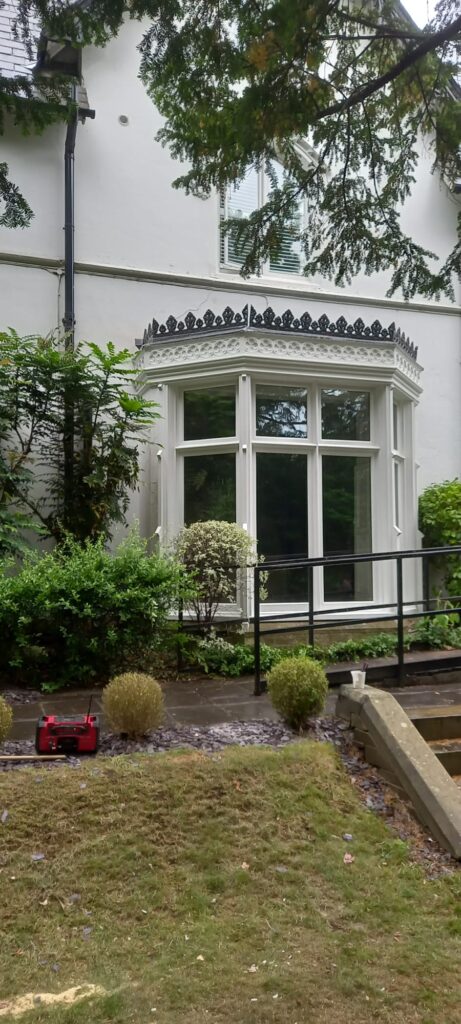
Lifespan depends on three factors: the species, the finish quality and the maintenance regime.
Softwood: 25-35 years with regular painting. Frames that go 10 or more years without redecoration will begin to rot at joints and end grain, usually requiring replacement well before the upper end of that range.
Oak hardwood: 40-60 years in well-maintained condition. Some original oak frames in historic buildings have exceeded 100 years, though the glazing and hardware will have been replaced many times over.
Accoya: The BRE-verified service life projection is 60 years, and the manufacturer’s 50-year rot guarantee backs this up. Maintenance intervals are longer than either alternative, typically repainting or re-oiling every 8-12 years.
At GB Joinery, we have been manufacturing bespoke timber windows from our Stockport workshop for over 20 years. As an Accoya Approved Manufacturer and one of only a handful of UK joiners to hold BFRC A+ ratings on Accoya windows, we work with contractors, architects and specifiers across the UK on both standard and conservation projects.
If you are working through a specification and want to discuss material options for a live project, contact the GB Joinery team or call us on 0161 477 1818.
Window failures cost contractors time and money. Swelling frames, failed paint finishes and rot callbacks eat into profit margins and...
Read MoreChoosing between timber windows vs uPVC windows is one of the most common decisions contractors help clients make. Both have...
Read MoreGlazing can transform a bespoke timber front door, bringing natural light into an entryway while adding character and complementing the...
Read MoreA front door can have a significant influence on the character of a period property. Panel layout, mouldings, glazing and...
Read More

.png/v1/fill/w_180,h_180/yell-logo-full-bleed-190%20(002).png)
