
Made to measure vs standard doors: What you need to know
What is best? Made to measure vs standard doors? If you’re working on a new build with consistent, square openings...
Read MoreLast Updated: 23 July 2026
For most residential projects where aesthetics, sustainability and thermal performance matter, timber bifold doors are the stronger specification. For high-traffic commercial builds or large-span openings requiring maximum structural rigidity, aluminium has the edge. The right call depends on the project brief. Here is a structured comparison covering appearance, thermal efficiency, Building Regulations compliance, durability and cost, so you can make an informed decision at specification stage.
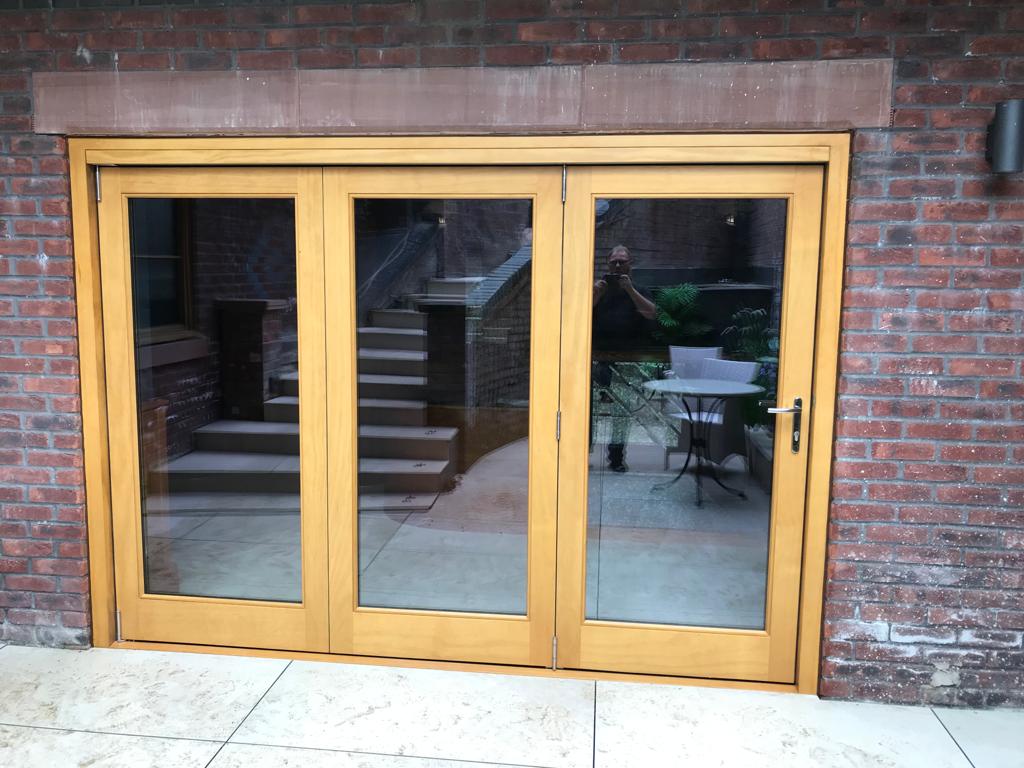
Timber bifold doors carry a visual warmth that aluminium cannot replicate. The natural grain of wood gives each door a character that suits both period properties and contemporary new builds. Timber systems can be painted or stained to any RAL colour, allowing precise specification to match window joinery and architectural ironmongery across a project.
Aluminium profiles tend to be slimmer, which suits a minimal aesthetic and maximises glazed area. The powder-coated finish is durable, but the look is consistent rather than distinctive. For projects where the door is a focal point rather than a background element, wooden bifold doors make a stronger visual statement.
If you are working on a heritage scheme, conservation area, or high-end residential build, the finish quality of a timber system tends to satisfy planning conditions more reliably. GB Joinery supplies hand-crafted timber doors made to your exact specification from our workshop in Stockport.
Wood is a naturally poor conductor of heat. That means a timber frame provides inherent resistance to heat loss without additional engineering. Aluminium achieves comparable performance only through a thermally broken profile, which adds cost and complexity to the system.
For projects targeting high energy efficiency ratings, triple-glazed timber bifold doors can achieve excellent thermal performance, placing them comfortably ahead of minimum Building Regulations requirements and supporting better results on new build schemes.
External bifold doors must comply with several areas of Building Regulations:
Part L (Conservation of fuel and power): Your door system must be specified with a certified whole-unit U-value, not just a glazing unit value of no more than 1.4 W/m²K.
Part F (Ventilation): Where a new external door replaces a window or door that previously provided background ventilation, equivalent ventilation must be provided. This typically means fitting trickle vents or equivalent air vents to maintain background airflow.
Part Q (Security): External doors must resist physical attack. Timber bifold door systems with multi-point locking and quality ironmongery can meet Part Q requirements.
Part K (Protection from falling): Where glazing is within a critical zone, it must be safety glazing. This applies to both timber and aluminium systems.
A well-maintained timber bifold door system will last 30 to 60 years. The key word is maintained. Timber requires periodic repainting or restaining, typically every five to eight years depending on exposure. External timber doors that face south or west and receive direct weather will need more frequent attention.
Aluminium doors require very little maintenance. The powder-coated finish is resistant to corrosion and UV degradation. For landlord-managed properties or commercial schemes where maintenance access is limited, this is a practical advantage.
| Factor | Timber bifold doors | Aluminium bifold doors |
| Supply cost (typical) | £800-£2,000 per leaf | £700-£1,800 per leaf |
| Installation complexity | Standard | Standard |
| Ongoing maintenance | Moderate (periodic redecoration) | Low |
| Repairability | High | Low |
| Lifespan (maintained) | 30-60 years | 30-45 years |
Supply costs for timber and aluminium bifold systems are broadly comparable at specification stage. The cost differential over a building’s lifetime often favours timber when you account for repairability and the fact that timber doors can be refinished rather than replaced. The maintenance cost for a timber system is a known, manageable overhead, not a hidden expense.
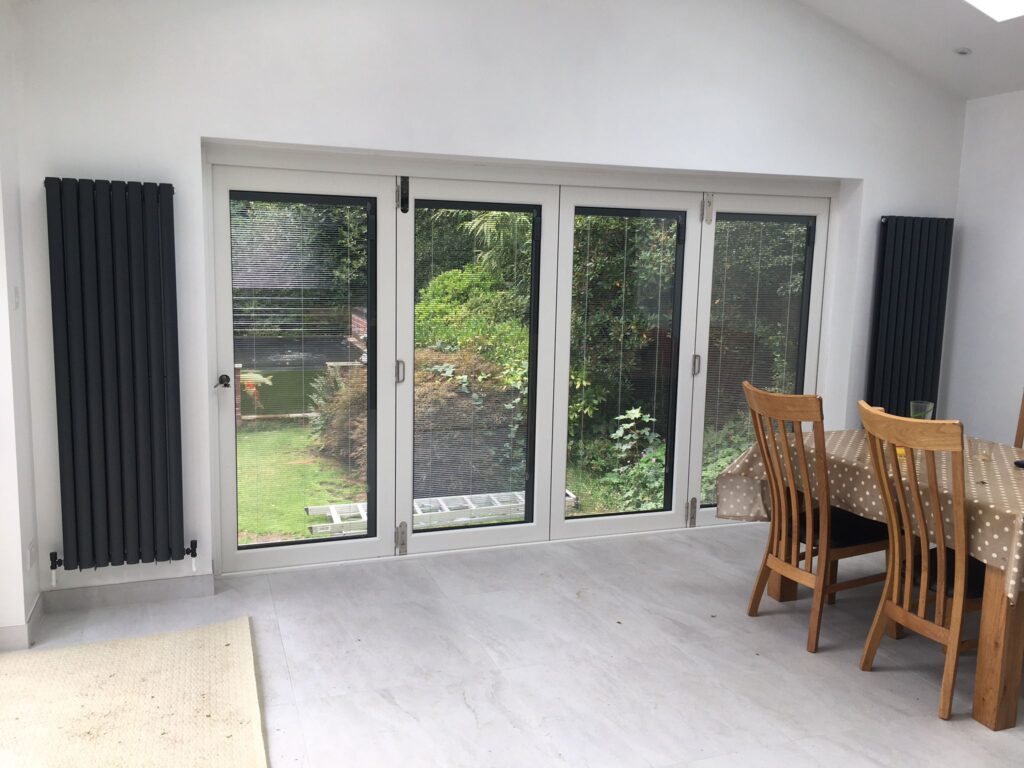
Choose timber bifold doors if:
Choose aluminium bifold doors if:
For contractors and project managers working across residential and mixed-use schemes in Cheshire and the North West, GB Joinery manufactures bespoke timber windows and doors to your specification from our Stockport workshop. Lead times run to four to six weeks, and we work directly with building contractors to meet project programmes.
To discuss your next bifold door specification, call us on 0161 477 1818 or send us a message online and we’ll get back to you as quickly as possible.
What is best? Made to measure vs standard doors? If you’re working on a new build with consistent, square openings...
Read MoreWhen it comes to specifying timber doors for your building projects, understanding door frame dimensions UK is essential. Whether you’re...
Read MoreWhen you’re managing a high-end residential or commercial project, settling for standard-spec windows and doors simply won’t do. Bespoke timber...
Read MoreFor trade professionals seeking outstanding aesthetics and functionality, selecting the right wooden doors is crucial for your project. Wooden doors...
Read More

.png/v1/fill/w_180,h_180/yell-logo-full-bleed-190%20(002).png)
